A MOQ is not an arbitrary barrier but a rational choice by tote bag factories, rooted in cost, efficiency, and supply chain stability. Understanding the underlying business logic is the key for entrepreneurs to secure flexible cooperation solutions.
Why Do Handbag Factories Have a MOQ? From Cost Logic to Practical Tips for Lowering the Threshold
A common question from entrepreneurs starting their own bag brands: Why won't anyone accept an order for just 30 bags? Many factories are simply unwilling to take such small orders.
When customizing tote bags, almost all manufacturers set a Minimum Order Quantity (MOQ) requirement. This industry-standard practice is rooted in solid business logic and production realities. This article will delve into the reasons behind MOQ, the factors influencing it, and provide you with practical strategies to navigate it.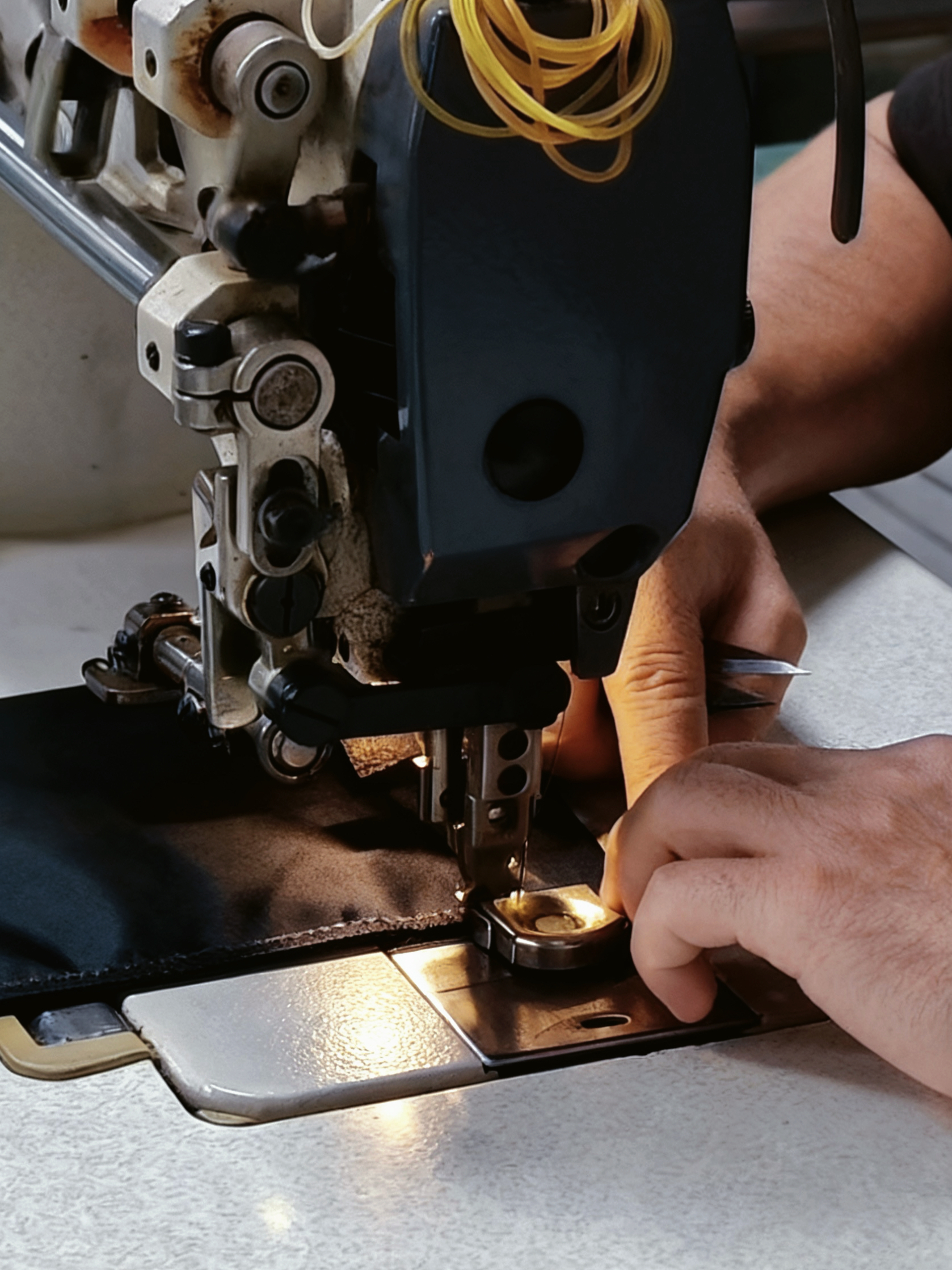
What is MOQ?
A MOQ is the smallest number of units a factory is willing to accept for an order. For example, if a tote bag factory has an MOQ of 300 pieces, you cannot order just 50 or 100 pieces, this threshold is the basic requirement to ensure the production is economically viable.
It's important to note that MOQ is not a single, fixed standard; it varies dynamically based on product type, complexity of craftsmanship, and other factors.
Why Must Bag Factories Set an MOQ?
Tote bag production involves multiple stages like material procurement, equipment setup, and labor allocation. At its core, MOQ is a tool to balance the costs and efficiency across these stages. Let's break it down into five key dimensions:
1. Cost Control: Avoiding "Losing Money on Every Order"
Production costs include both fixed and variable costs. The fatal flaw of small orders is their inability to spread fixed costs effectively.
Costs like machine setup (e.g., aligning printing screens, adjusting sewing machine parameters), mold creation, and sample fees are largely fixed, whether you produce 10 or 1000 bags. With an MOQ of only 50 pieces, the fixed cost allocated to each unit could exceed the cost of the materials themselves.
- Material Procurement Advantages
The price of raw materials like fabric, zippers, and hardware is directly tied to quantity. Bulk purchasing can reduce costs by 20%-30% compared to buying small quantities, where factories must accept higher prices, further squeezing profit margins.
Processes like fabric cutting and leather utilization have standard waste rates. The unit waste rate for small orders is typically 3-5 times higher than for large orders. For instance, a custom-sized tote bag in a small run might generate 30% fabric waste, whereas a large order could keep the waste rate below 10%.
2. Production Efficiency: Making the Production Line "Worth Running"
Production lines in tote bag factories have "startup costs." Frequently switching between orders severely reduces efficiency.
- Maximizing Equipment Utilization
Setting up large printing machines, molding machines, etc., can take up to 30 minutes. For small orders, the setup time might even exceed the actual production run time, leading to very low output per hour. Large-scale factory equipment can have a capacity of 1000 units per hour – small orders simply cannot support effective equipment operation.
- Improving Labor Efficiency
Workers develop a rhythm and familiarity when handling orders of the same specification. Frequently changing styles requires them to re-learn processes, increasing error rates by over 20%. MOQ ensures workers can focus on a single order, boosting both speed and quality.
- Implementing Standardized Quality Control
It's difficult to implement a full QC process for small orders. For MOQ-sized orders, factories can apply standardized procedures like "first-article inspection + batch sampling + final piece review" to control quality and reduce the risk of returns.
3. Supply Chain Stability: Maintaining Upstream and Downstream Coordination
Tote bag factories don't operate in isolation; they are part of a supply chain. MOQ helps ensure the stable operation of this chain.
- Predictable Raw Material Supply:
Fabric and accessory suppliers also have their own MOQs. If a bag factory accepts small orders, it might face the dilemma of having to "purchase 1000 meters of fabric from a supplier but only use 200 meters," leading to excess inventory.
- Accurate Demand Forecasting
A steady flow of MOQ-sized orders allows factories to plan procurement and production 3-6 months in advance, avoiding material shortages or finished goods overstock. For example, large orders before the peak season help factories secure quality materials.
- Foundation for Long-Term Partnerships
A factory's bargaining power with its suppliers relies on stable order volumes. Frequent, small orders make it hard to build trust, whereas MOQ orders foster long-term cooperation, leading to better payment terms and delivery cycles.
4. Risk & Profit Balance: Filtering Out Inefficient Orders
Factory operations need to mitigate financial risk, and MOQ acts as a natural "risk filter."
- Ensuring Basic Profitability
Small orders often have a negative unit profit. For example, the gross profit from customizing 100 printed tote bags might not even cover the labor costs, whereas an order for 500 pieces can achieve a reasonable 15%-20% gross margin.
- Reducing Operational Risk
Frequently handling small orders increases administrative costs – the time spent on order processing, communication, and invoicing is similar to that for a large order but doesn't generate comparable revenue.
- Screening for Quality Clients
MOQ helps filter out one-off, "try-and-see" customers, allowing factories to focus on brands or wholesalers with long-term potential, thus reducing resource waste.
5.Customization Processes: Covering Upfront Investment
Customization is a core value of tote bags, but each custom process has a "startup cost."
Complex processes like multi-color printing or special-shaped cutting are easier to keep consistent in mass production. Small orders, with their frequent machine adjustments, are more prone to issues like color variation or inconsistent sizing.
4 Core Factors Determining Tote Bag MOQ
You might wonder, "Why does Factory A require 500 pieces for a custom tote, while Factory B only needs 100?" The answer lies in how MOQ is influenced by multiple factors:
- Material Type: Suppliers of special materials (e.g., specific leathers, organic cotton) have higher MOQs. Scarce materials require advance stocking, which pushes up the required order quantity.
- Customization Complexity: More customization steps (multi-color printing, embroidery, complex structures, hand-weaving) mean higher setup costs, leading to a higher MOQ.
- Production Process: Labor-intensive or multi-step processes (e.g., multiple sewing stages, special treatments) necessitate larger orders to justify the time investment.
- Factory Size & Specialization: Large factories with high automation often have higher MOQs to keep lines running efficiently. Smaller, niche, or "flexible manufacturing" factories may offer lower MOQs.
Practical Strategies: How to Lower the MOQ Requirement?
- Choose Standard Styles: Select from the factory's existing catalog and make only simple modifications like adding a LOGO. This can significantly reduce the MOQ.
- Consolidate Orders: Partner with other small buyers to combine your orders and meet the factory's MOQ together.
- Flexible Negotiation Tactics:
- Emphasize Long-Term Partnership: Show the potential for future order growth.
- Offer a Higher Deposit: A larger upfront payment increases the factory's confidence.
- Accept a Slightly Higher Unit Price: Be willing to pay more per bag in exchange for a lower quantity threshold.
- Partner with Flexible or Small-Scale Manufacturers: The industry is shifting towards "flexible manufacturing." Some factories use smart equipment for efficient small-batch production, with MOQs as low as 50 pieces. Additionally, small factories or local workshops have lower fixed costs and typically offer MOQs of 100-300 pieces. While the unit price might be 5%-10% higher than large factories, this approach drastically reduces initial investment.
About Orange Star Bag Manufacturer's MOQ
As a bag manufacturer focused on serving startup brands, Orange Star leverages a flexible production system to offer a more inclusive MOQ standard, balancing production economics with client flexibility.
Example:
- Using Client's Own Design (requires tech packs or samples): Genuine Leather Bags - MOQ 50 pieces / color / style.
Note: Specific MOQ is adjusted based on product type, design complexity, material scarcity, and process complexity. Please contact our sales team for a personalized solution.
Conclusion: MOQ is Not a Barrier, But an "Optimal Solution" for Collaboration
The MOQ set by tote bag factories isn't an arbitrary barrier; it's a rational choice based on cost, efficiency, and supply chain stability. Once you understand this logic, you can find a cooperation model that suits your needs by choosing the right factory, optimizing your order plan, and building long-term relationships.
For startup brands, a low MOQ means lower trial costs and faster market response. ORANGE STAR BAG FACTORY recognizes this need and has reduced the MOQ for genuine leather products to just 50 pieces through flexible production technology, helping entrepreneurs test the market and validate demand with small batches.
If you are in the initial stages of building your brand and need a low-threshold, custom tote bag solution, we welcome you to contact us anytime.
